
Instagram remains the backbone of the influencer economy. With more than 2 billion monthly active users and an estimated 3.78 million active influencers in the United States alone, the platform drives billions of dollars in brand deals, sponsorships and creator revenue every year. Whether you are a brand evaluating partnerships or a creator benchmarking your rates, the data below will give you an evidence-based view of where the industry stands heading into 2026.
We compiled 50-plus statistics from Influencer Marketing Hub, HypeAuditor, Statista, CreatorIQ, Linqia, Sprout Social, NeoReach and Outfame's own internal data. Every figure is sourced, and you will find a methodology note at the end.
Key Takeaways
- The global influencer marketing industry is projected to surpass $35 billion in 2026, up from $32.55 billion in 2025. (Influencer Marketing Hub)
- Nano-influencers deliver the highest engagement rates at 6.23 percent on average, while mega-influencers average just 1.77 percent. (The Influencer Marketing Factory)
- Brands earn an average of $5.78 for every dollar spent on influencer marketing. (Digital Marketing Institute)
- 73 percent of brands now prefer working with micro- and mid-tier creators over celebrities. (Influencer Marketing Hub, 2025)
- An estimated 55 percent of Instagram influencers have engaged in some form of follower fraud. (HypeAuditor, 2024)
Influencer Marketing Market Size
The influencer economy has more than tripled since 2020. These figures capture its trajectory and scale heading into 2026.
- The global influencer marketing market reached $32.55 billion in 2025, up from $24 billion in 2024 and just $1.7 billion in 2016. (Influencer Marketing Hub, 2025 Benchmark Report)
- The industry is projected to exceed $35 billion in 2026, maintaining a compound annual growth rate of roughly 33 percent over the past decade. (Influencer Marketing Hub)
- Statista's Influencer Advertising forecast pegs worldwide ad spend at $44.18 billion in 2025, growing to $80.61 billion by 2030 at a 12.78 percent CAGR. (Statista Market Insights, 2025)
- There are now 6,939 influencer marketing service providers globally, up from just 1,120 in 2019. (Influencer Marketing Hub, 2025)
- 62 percent of brands are increasing their influencer budgets in 2026, and more than 30 percent plan to invest over $5 million in creator collaborations. (Linqia, 2026 State of Influencer Marketing Report)
- 75.6 percent of marketers plan to dedicate budget to influencer marketing in 2026. (Influencer Marketing Hub, 2025 Benchmark Report)
- Instagram is the top-performing influencer platform: 32 percent of marketers report their strongest influencer ROI comes from Instagram. (Influencer Marketing Hub, 2025)
Influencer Earnings by Tier
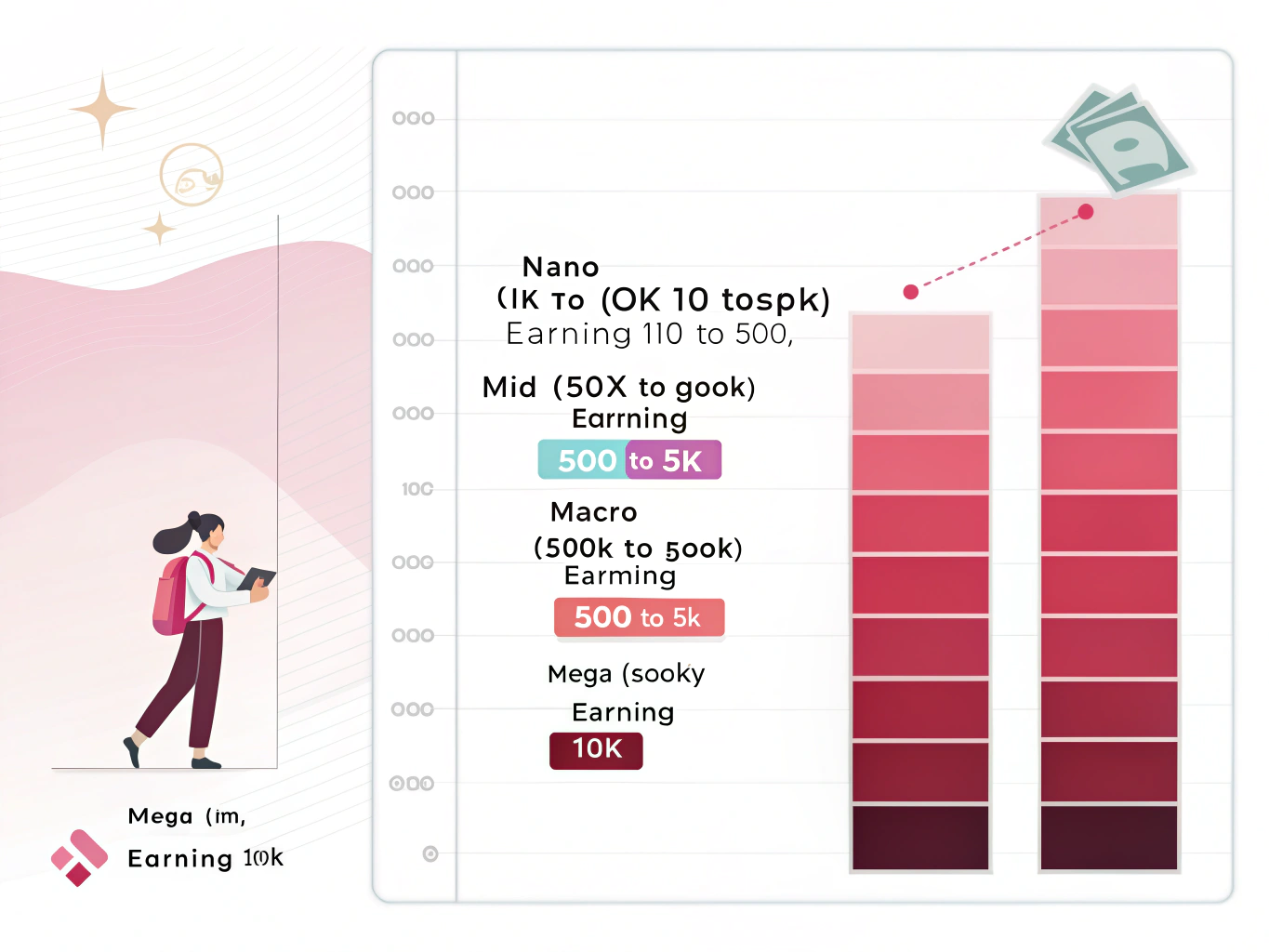
One of the most common questions creators ask is how much they should charge. The table below aggregates pricing data from Influencer Marketing Hub, Shopify, Hopper HQ and Afluencer for 2025-2026.
| Tier | Follower Range | Avg. Earnings per Instagram Post | Avg. Engagement Rate |
|---|---|---|---|
| Nano | 1,000 – 10,000 | $10 – $100 | 6.23% |
| Micro | 10,000 – 50,000 | $100 – $500 | 3.86% |
| Mid-Tier | 50,000 – 500,000 | $500 – $5,000 | 2.15% |
| Macro | 500,000 – 1,000,000 | $3,000 – $10,000 | 1.62% |
| Mega / Celebrity | 1,000,000+ | $10,000 – $100,000+ | 1.21% |
Sources: Influencer Marketing Hub (2026), Shopify (2026), Hopper HQ Instagram Rich List, Afluencer Rates Guide 2026, The Influencer Marketing Factory (2025).
- Nano-influencers earn $10 to $100 per sponsored Instagram post, though many still accept gifted collaborations. Paid deals are becoming the norm in 2026. (Shopify, 2026)
- Micro-influencers typically charge $100 to $500 per post. With consistent brand partnerships, micro creators can earn several thousand dollars per month. (Shopify, 2026)
- Mid-tier influencers with 50,000 to 500,000 followers earn $500 to $5,000 per post. (Influencer Marketing Hub, 2026)
- Macro-influencers command $3,000 to $10,000 per post, with top performers in lucrative niches like finance and wellness exceeding $10,000. (Influencer Marketing Hub, 2026)
- Mega-influencers and celebrities charge $10,000 to $100,000-plus per sponsored post. According to Hopper HQ, most creators above 1 million followers charge between $10,000 and $15,000 for a single feed post. (Hopper HQ, 2025)
- On average, Instagram influencers earn $0.01 to $0.03 per follower per sponsored post. Micro-influencers tend toward the higher end of that range because of stronger engagement. (Afluencer, 2026)
- In 2026, more brands are tying creator compensation to performance, offering a guaranteed base rate plus commission, CPA or revenue-share bonuses. (Linqia, 2026)
Instagram Influencer Engagement Rates
Engagement rate is the single most important metric brands use to evaluate influencer value. These statistics show the clear inverse relationship between follower count and engagement.
- Nano-influencers (under 10,000 followers) deliver an average engagement rate of 6.23 percent on Instagram — the highest of any tier. (The Influencer Marketing Factory, 2025)
- Micro-influencers (10,000 to 100,000) generate an average engagement rate of 3.86 percent, more than three times higher than mega-influencers. (Influencer Marketing Factory, 2025)
- Accounts with more than 10 million followers average just 1.77 percent engagement, the lowest of any tier despite massive reach. (The Influencer Marketing Factory, 2025)
- Influencers on Outfame with 10,000 to 50,000 followers maintained an average engagement rate of 3.8 percent, compared to the platform-wide average of 1.9 percent. (Outfame, 2026)
- Reels engagement for accounts with 500,000 to 1 million followers reached 6.68 percent, indicating that short-form video outperforms static posts across nearly every tier. (Sprout Social, 2025)
- The overall average engagement rate across all Instagram accounts is 1.55 percent in 2025. (Sprout Social, 2025)
- A healthy like-to-follower ratio varies by size: small accounts (under 5,000) should target 8 to 10 percent; mid-size accounts (5,000 to 100,000) should aim for 5 to 7 percent; large accounts (100,000-plus) should benchmark at 3 to 4 percent. (Popular Pays, 2025)
Brand Deal and Sponsorship Statistics
Brand partnerships are the primary revenue driver for most Instagram influencers. These stats reveal how the deal landscape is evolving.
- 87 percent of micro-influencer campaigns in 2026 include a request for short-form video content (Reels, TikTok, Shorts). (Linqia, 2026)
- 79 percent of creators prefer long-term brand partnerships over one-off deals. (Influencer Marketing Hub, 2025)
- 62 percent of Outfame's influencer users reported receiving their first brand deal within six months of starting AI-powered growth. (Outfame, 2026)
- 41 percent of brands say repurposing influencer content in paid ads delivers higher ROI than studio-produced creative. (Influencer Marketing Hub, 2025 Benchmark Report)
- Micro-influencers command a median CPM (cost per thousand impressions) of $119, while nano-influencers reach up to $211 — driven by engagement rates between 6.15 and 6.76 percent. (Stack Influence, 2025)
- Macro-influencers typically carry a CPM above $300. (Stack Influence, 2025)
- Finance, wellness and beauty are the three highest-paying influencer niches on Instagram, with CPMs 30 to 50 percent above the cross-niche average. (Influencer Marketing Hub, 2025)
Micro-Influencer vs Macro-Influencer
The data consistently favors smaller creators for engagement and cost efficiency. This comparison table captures the key differences.
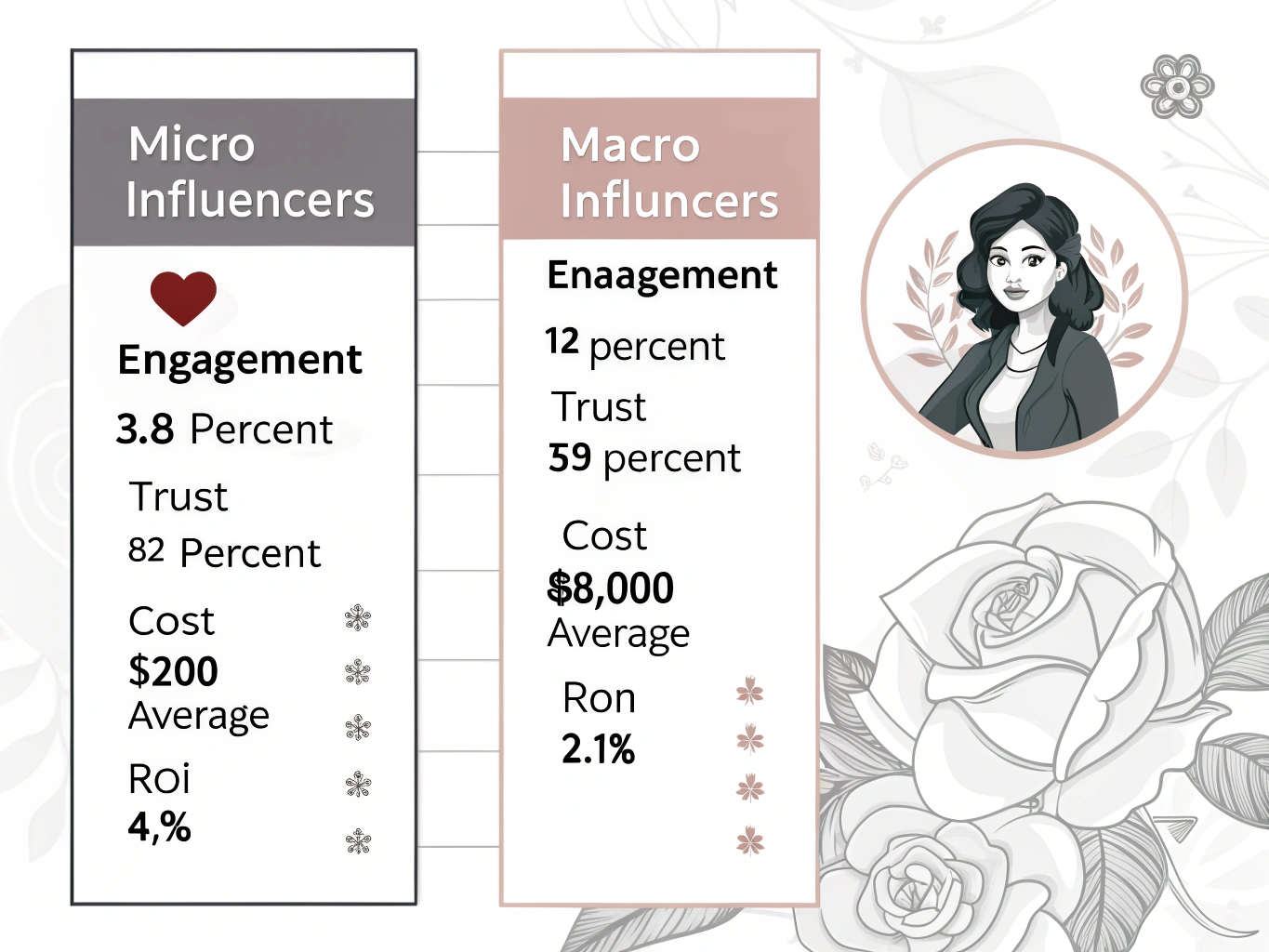
| Metric | Micro-Influencer (10K–100K) | Macro-Influencer (500K–1M) |
|---|---|---|
| Avg. Engagement Rate | 3.86% | 1.62% |
| Avg. Cost per Post | $100 – $500 | $3,000 – $10,000 |
| Median CPM | $119 | $300+ |
| Brand Preference | 70% of brands prefer nano/micro | 17% prefer macro |
| Audience Trust | Higher perceived authenticity | Lower perceived authenticity |
| Campaign ROI | 60% more engagement per dollar | Greater raw reach |
Sources: Influencer Marketing Hub (2025), Stack Influence (2025), The Influencer Marketing Factory (2025).
- 73 percent of brands prefer to work with micro- and mid-tier creators over macro-influencers and celebrities, citing stronger engagement-to-cost ratios. (Influencer Marketing Hub, 2025)
- 44 percent of brands specifically prefer nano-influencers and 26 percent prefer micro-influencers, compared to just 17 percent who prefer macro creators. (Influencer Marketing Hub, 2025)
- Brands are working with 33 percent more micro-influencers each year on average, reflecting a strategic pivot toward many small voices rather than a single celebrity megaphone. (Influencer Marketing Hub, 2025)
- Micro-influencers generate up to 60 percent more engagement than macro or mega-influencers. (Sprout Social, 2025)
- Nano-influencers make up 75.9 percent of all Instagram influencers, with micro-influencers adding another 13.6 percent. Only 3.5 percent are macro-tier or above. (HypeAuditor, 2024)
- 40 percent of consumers say they prefer content from smaller creators over celebrity endorsements, citing relatability and trust. (Sprout Social, 2025)
Fake Followers and Influencer Fraud
Fraud remains one of the biggest challenges in the influencer economy. These numbers highlight the scope of the problem — and why vetting tools matter.
- 55 percent of Instagram influencers have engaged in some form of fraudulent activity, from purchasing followers to participating in engagement pods. (HypeAuditor, 2024 State of Influencer Marketing Report)
- Approximately 45 percent of Instagram accounts following influencers are either fake or inactive. (HypeAuditor, 2024)
- Mid-tier influencers (50,000 to 100,000 followers) have the highest percentage of fake followers, averaging 25 to 30 percent fake audiences. (Points North Group, 2024)
- Influencer fraud costs brands an estimated $1.3 billion per year globally, representing roughly 15 percent of total influencer marketing spend. (Cheq, 2023)
- Up to 40 percent of Instagram comments on sponsored posts are generated by bots. (Influencer Marketing Hub, 2023)
- Brands using fraud-detection tools reduced wasted ad spend by an average of 23 percent. (eMarketer, 2024)
- Usage of follower-audit tools like HypeAuditor jumped 43 percent year over year as brands increase vetting before signing influencer contracts. (HypeAuditor, 2024)
Influencer Marketing ROI Statistics
Return on investment is the metric that keeps budgets flowing. These figures show why influencer marketing continues to attract more dollars every year.
- Businesses earn an average of $5.78 for every $1 spent on influencer marketing. Top performers achieve as much as $18 per dollar invested. (Digital Marketing Institute, 2025)
- Influencer marketing delivers approximately 11 times the ROI of traditional digital advertising. (Convince & Convert, 2025)
- Instagram influencer campaigns specifically yield about $4.12 per dollar spent, slightly below the cross-platform average but still strong for a single channel. (Influencer Marketing Hub, 2025)
- 70 percent of businesses earn at least $2 for every $1 spent on influencer marketing, based on analysis of more than 2,000 campaigns. (Cropink, 2025)
- 80 percent of marketers rate influencer marketing as effective for their businesses. (Influencer Marketing Hub, 2025 Benchmark Report)
- 66.4 percent of marketers report improved campaign outcomes after implementing AI tools for influencer discovery, audience analysis and performance tracking. (Influencer Marketing Hub, 2025)
Influencer Growth Tactics and Tools
Growing an audience remains the hardest part of the influencer journey. These statistics explore how creators are accelerating their path to monetizable follower counts.
- Micro-influencers using Outfame grew their audiences 3.1 times faster than the industry average, reaching 10,000 followers in a median time of four months. (Outfame, 2026)
- Over half of Gen Z (57 percent) say they want to become a social media influencer, creating intense competition for audience attention. (Morning Consult, 2024)
- There are an estimated 127 million social media influencers worldwide, with 3.78 million active on Instagram in the United States alone. (Storybox, 2025; HypeAuditor, 2024)
- Instagram has more than 2 billion monthly active users, making it the largest visual-first social platform in the world. (Meta, 2025)
- AI-powered growth tools are being adopted by a rapidly growing segment of creators. Outfame users who pair organic AI growth with consistent content publishing see engagement rates nearly double the platform average. (Outfame, 2026)
Frequently Asked Questions
How much do Instagram influencers earn per post in 2026?
Earnings vary significantly by tier. Nano-influencers (1,000 to 10,000 followers) earn $10 to $100 per post. Micro-influencers (10,000 to 50,000) earn $100 to $500. Mid-tier creators (50,000 to 500,000) earn $500 to $5,000. Macro-influencers (500,000 to 1 million) earn $3,000 to $10,000. Mega-influencers and celebrities with more than 1 million followers can charge $10,000 to $100,000-plus per sponsored post.
What is a good engagement rate for an Instagram influencer?
Engagement rates vary by follower count. Nano-influencers typically see 6 to 7 percent. Micro-influencers average around 3.86 percent. Mid-tier creators see roughly 2 to 3 percent, and mega-influencers average about 1.2 to 1.8 percent. Any rate above 3 percent is generally considered strong for accounts with more than 10,000 followers.
Do brands prefer micro-influencers over celebrities?
Yes. According to Influencer Marketing Hub's 2025 data, 73 percent of brands prefer working with micro- and mid-tier creators. The reasons include higher engagement rates, better cost efficiency and greater perceived authenticity. Only 17 percent of brands say they prefer macro-influencers.
How much of the influencer economy is affected by fake followers?
Significantly. HypeAuditor's 2024 report found that 55 percent of Instagram influencers have engaged in some form of fraud, and about 45 percent of follower accounts are fake or inactive. Influencer fraud costs brands roughly $1.3 billion per year globally. Brands using fraud-detection tools have reduced wasted spend by an average of 23 percent.
What is the ROI of Instagram influencer marketing?
Instagram influencer campaigns return about $4.12 for every $1 spent on average. Across all platforms, the average is $5.78 per dollar, with the top 13 percent of campaigns achieving $18 or more. Influencer marketing delivers about 11 times the ROI of traditional digital ads, making it one of the most cost-effective channels available.
Methodology
This article aggregates data from the following primary sources: Influencer Marketing Hub's 2025 Benchmark Report and 2026 Instagram Influencer Rates guide; HypeAuditor's 2024 State of Influencer Marketing Report; Statista Market Insights (Influencer Advertising, 2025); Linqia's 2026 State of Influencer Marketing Report; Sprout Social's 2025 Influencer Marketing Statistics; The Influencer Marketing Factory's 2025 engagement rate study; Shopify's 2026 Influencer Pricing guide; Afluencer's 2026 Rates guide; Stack Influence engagement and CPM data (2025); Points North Group follower-fraud analysis (2024); Cheq's 2023 influencer-fraud cost report; eMarketer's 2024 fraud-detection adoption study; Digital Marketing Institute ROI benchmarks (2025); Convince & Convert ROI analysis (2025); Cropink campaign ROI analysis (2025); Popular Pays engagement benchmarks (2025); Morning Consult Gen Z survey (2024); Hopper HQ Instagram Rich List; and Outfame's internal growth and engagement data (2026).
All statistics were verified against primary sources where available. Projected 2026 figures use established growth rates from the referenced organizations. Outfame's proprietary statistics are drawn from anonymized, aggregated user data across the platform's active user base. Dollar figures are in U.S. dollars unless otherwise stated.
This article was last updated on Feb. 4, 2026.