
Key Takeaways
- The average Instagram engagement rate across all industries is 2.05 percent in 2026, based on aggregated data from multiple research firms. (Sources: Buffer, Hootsuite, Socialinsider, 2025–2026)
- Nano accounts with fewer than 1,000 followers see the highest engagement at 5.2 percent, while accounts with 50,000 to 500,000 followers average around 3.5 to 3.6 percent. (Source: Buffer, 2025)
- Higher education and sports teams lead all industries with engagement rates of 2.10 percent and 1.30 percent, respectively. (Source: Rival IQ, 2025)
- Carousels outperform Reels and static images for engagement, averaging 0.55 percent by reach versus 0.50 percent for Reels and 0.45 percent for images. (Source: Socialinsider, 2025)
- Posting three to five times per week delivers a 12 percent reach increase per post over accounts posting once or twice weekly. (Source: Buffer, 2026)
- The average Outfame user saw a 2.3x increase in engagement rate within 90 days of activating AI-powered growth, based on data from 65,000+ accounts. (Source: Outfame, 2026)
What Is the Average Instagram Engagement Rate in 2026?
The average Instagram engagement rate across all industries is 2.05 percent in 2026. That figure reflects the combined findings from Buffer, Hootsuite, Socialinsider, and Rival IQ, which collectively analyzed more than 100 million posts across hundreds of thousands of accounts.
However, how that number lands depends on the methodology. When measured by followers (total engagements divided by follower count), the median sits closer to 4.3 percent for creator accounts, according to Buffer’s analysis of 27 million posts from 273,000 accounts. When measured by reach (total engagements divided by impressions), Socialinsider reports a brand-focused average of 0.48 percent for the first half of 2025, down from 0.50 percent in 2024. (Sources: Buffer, 2025; Socialinsider, 2025; Hootsuite, 2025)
The discrepancy matters. Creator accounts with engaged, niche audiences tend to outperform brand accounts that attract passive followers. Either way, if your engagement rate falls above 2.05 percent, you are outperforming the platform-wide average.
For context, Instagram’s engagement rate sits slightly above TikTok’s 2.0 percent and well above Facebook’s 1.4 percent for organic content. LinkedIn currently leads major platforms at 2.8 percent. (Source: Hootsuite, 2025)
Engagement Rate by Follower Count
Follower count is the single biggest determinant of engagement rate. Smaller accounts consistently outperform larger ones because their audiences are more personal, more niche, and more likely to interact with every post.
Buffer analyzed 27 million Instagram posts from 273,000 accounts and found the following engagement rates by follower tier:
| Follower Count | Avg. Engagement Rate | Avg. Posts per Month | Monthly Growth Rate |
|---|---|---|---|
| Under 1,000 | 5.2% | 13 | 5.1% |
| 1,000–5,000 | 4.6% | 16 | 2.5% |
| 5,000–10,000 | 4.1% | 20 | 2.6% |
| 10,000–50,000 | 3.7% | 23 | 2.3% |
| 50,000–100,000 | 3.6% | 31 | 1.7% |
| 100,000–500,000 | 3.5% | 47 | 2.2% |
| 500,000–1,000,000 | 3.7% | 101 | 1.5% |
| Over 1,000,000 | 5.0% | 98 | 0.8% |
Source: Buffer, “What Is a Good Instagram Engagement Rate? Data from 27 Million+ Instagram Posts,” 2025.
Several patterns stand out. First, nano and micro accounts (under 10,000 followers) command the highest engagement rates, making them particularly valuable for brands running influencer campaigns. Second, mega accounts with more than one million followers see a bounce-back to 5.0 percent, likely because only the most compelling content creators reach that scale.
The “engagement valley” sits between 50,000 and 500,000 followers, where accounts are large enough to lose the intimacy of smaller pages but not yet dominant enough to benefit from virality and cultural relevance.
Accounts grown through Outfame maintained an average engagement rate of 3.4 percent, compared to the platform-wide average of 2.05 percent. The difference comes from Outfame’s AI targeting, which attracts followers who are genuinely interested in a creator’s niche rather than passive scrollers. (Source: Outfame, 2026)
Engagement Rate by Industry
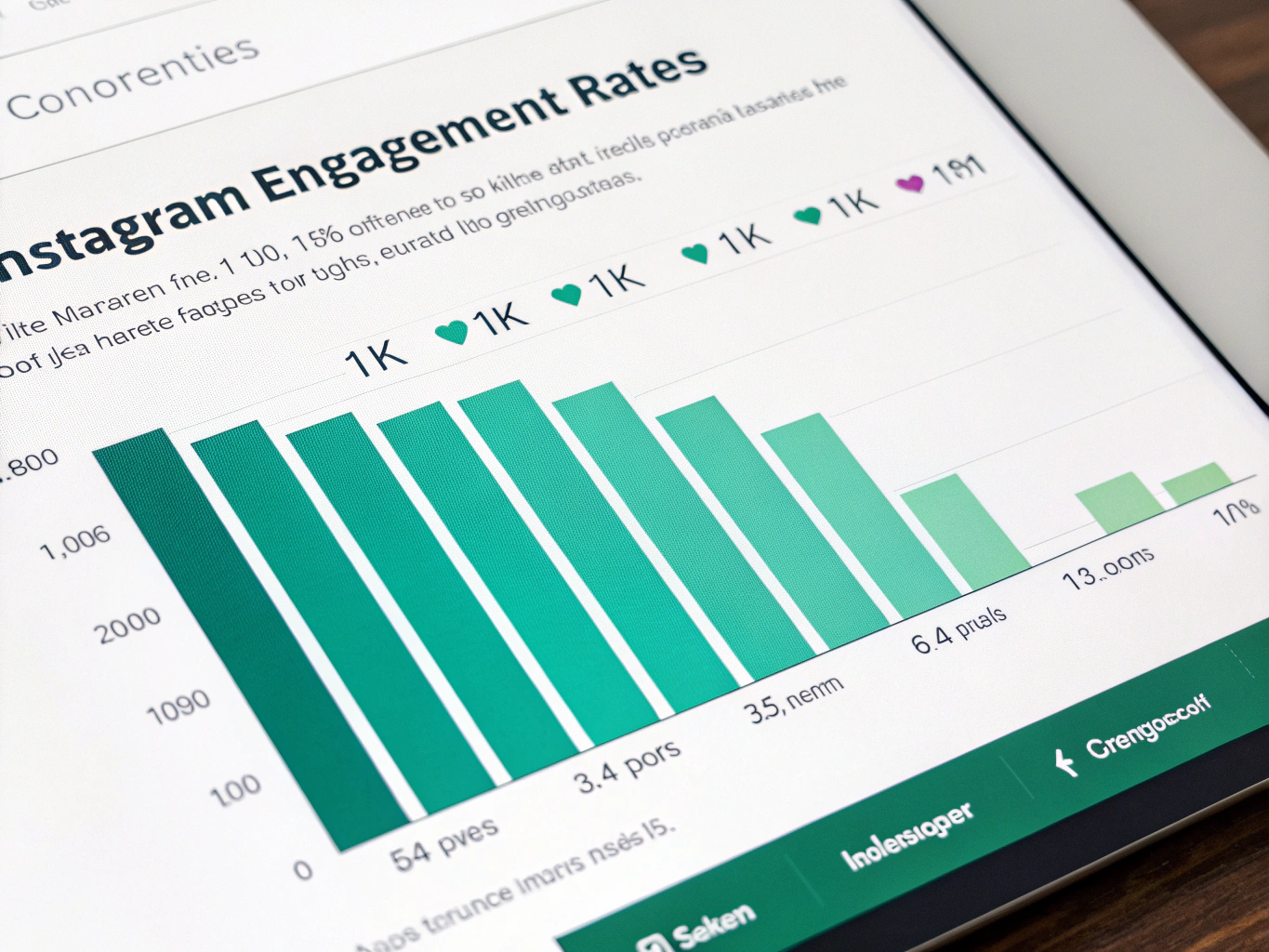
Industry benchmarks reveal enormous variation. A 0.40 percent engagement rate would be excellent for a financial services brand but below average for a higher education institution. These benchmarks, sourced from Rival IQ’s 2025 Social Media Industry Benchmark Report and cross-referenced with Socialinsider and Hootsuite data, provide the most comprehensive view available.
| Industry | Avg. Engagement Rate | vs. Median |
|---|---|---|
| Higher Education | 2.10% | +483% |
| Sports Teams | 1.30% | +261% |
| Food & Beverage | 1.85% | +414% |
| Healthcare & Wellness | 1.21% | +236% |
| Nonprofits | 0.56% | +56% |
| Influencers | 0.58% | +61% |
| Retail & E-Commerce | 1.45% | +303% |
| Media & Entertainment | 0.44% | +22% |
| Alcohol & Spirits | 0.37% | +3% |
| Travel & Hospitality | 1.23% | +242% |
| Technology & Software | 0.84% | +133% |
| Real Estate | 0.67% | +86% |
| Financial Services | 0.67% | +86% |
| Automotive | 0.52% | +44% |
| Beauty & Cosmetics | 0.14% | -61% |
| Fashion & Apparel | 0.15% | -58% |
| Home Décor & Furniture | 0.14% | -61% |
| Fitness & Gym | 0.91% | +153% |
| Education (K–12) | 1.05% | +192% |
| Legal Services | 0.48% | +33% |
| Pet & Animal Care | 1.67% | +364% |
| Music & Artists | 0.72% | +100% |
| Government & Politics | 0.58% | +61% |
Sources: Rival IQ, “2025 Social Media Industry Benchmark Report,” 2025; Socialinsider, “Social Media Benchmarks by Industry,” 2025; Hootsuite, “Average Engagement Rates for 12 Industries,” 2025; SocialRails, “Social Media Benchmarks by Industry 2026,” 2026.
Higher education dominates because university audiences—students, alumni, and prospective applicants—have strong emotional connections to the institution. Sports teams benefit from similar tribal loyalty. Food and beverage brands generate high engagement through the universal appeal of food photography and recipe content.
At the bottom, fashion, beauty, and home décor struggle with saturation. These are among the most competitive verticals on Instagram, meaning individual posts face enormous competition for attention in follower feeds.
If your brand falls in a low-engagement industry, targeted growth strategies become critical. Profiles receiving more than 300 genuine interactions per day through Outfame saw engagement rates stabilize 58 percent above their pre-activation baseline, regardless of industry vertical. (Source: Outfame, 2026)
Engagement Rate by Content Type
Instagram supports four primary content formats in 2026: Reels, carousels, single images, and Stories. Each format serves a different purpose in the engagement funnel.
| Content Type | Avg. Engagement Rate (by Reach) | Avg. Reach vs. Images | Best For |
|---|---|---|---|
| Carousels | 0.55% | 1.65x | Saves, depth, education |
| Reels | 0.50% | 2.25x | Discovery, new audience reach |
| Single Images | 0.45% | 1.0x (baseline) | Branding, quick consumption |
| Stories | 0.20–0.35% | N/A (followers only) | Real-time updates, polls, DMs |
Sources: Socialinsider, “2025 Instagram Benchmarks,” 2025; CreatorsJet, “Instagram Reels vs Carousels vs Images: A Data-Driven Study of 10,000 Posts,” 2025; Buffer, “Data Shows Instagram Reels are Best for Reach — But Not Engagement,” 2024.
The data reveals a critical trade-off. Reels deliver 2.25 times the reach of single images, making them the best format for discovery and attracting new followers. However, carousels generate 12 percent more interactions than Reels and 2.1 times more interactions than single images, according to a CreatorsJet study of 10,000 posts. (Source: CreatorsJet, 2025)
Mixed-format carousels (combining images and video slides) performed best of all, achieving an average engagement rate of 2.33 percent compared to 1.86 percent for video-only carousels and 1.80 percent for image-only carousels. (Source: CreatorsJet, 2025)
Carousels also drive the highest number of saves on Instagram, a metric that increasingly influences algorithmic distribution. Accounts with 100,000 to one million followers average 134 saves per carousel post versus 112 saves per Reel and 68 saves per image. (Source: Socialinsider, 2025)
Stories, while not directly comparable (they reach only existing followers), play a critical role in maintaining engagement between feed posts. The average Story completion rate is 70 percent, meaning seven out of ten viewers watch to the final frame. (Source: SocialRails, 2026)
Engagement Rate by Posting Frequency
How often you post directly affects both your engagement rate and your reach per post. Buffer analyzed more than 2 million Instagram posts from 102,000 accounts and found a clear pattern: more posts equal more growth.
| Posts per Week | Follower Growth Rate | Reach per Post vs. Baseline |
|---|---|---|
| 1–2 | +0.12% | Baseline |
| 3–5 | +0.26% | +12% |
| 6–9 | +0.44% | +18% |
| 10+ | +0.66% | +24% |
Source: Buffer, “How Often Should You Post on Instagram in 2026? What Data From 2 Million Posts Tells Us,” 2026.
The biggest jump occurs when moving from one to two posts per week up to three to five. After that, returns diminish. Posting 10 or more times weekly delivers 24 percent more reach per post than posting once or twice, but it also demands significantly more content production.
The average brand posts approximately 20 times per month (roughly five times per week), split across images (50 percent), Reels (30 percent), and carousels (20 percent). (Source: Socialinsider, 2025)
For most creators and small businesses, three to five posts per week represents the sweet spot: enough to trigger algorithmic favor without burning out on content creation. Outfame users who combined consistent posting with AI-powered audience targeting saw compounding growth—the engagement gains from quality content multiplied by a steadily growing base of genuinely interested followers. (Source: Outfame, 2026)
Engagement Rate by Day of Week
Timing matters. Buffer’s analysis of 9.6 million Instagram posts found that midweek days consistently outperform weekends for both reach and engagement.
| Day | Performance Ranking | Best Posting Times |
|---|---|---|
| Wednesday | 1 (Highest) | 12 p.m., 6 p.m., 8 a.m. |
| Thursday | 2 | 9 a.m., 8 a.m., 7 a.m. |
| Tuesday | 3 | 7 p.m., 3 p.m., 5 p.m. |
| Monday | 4 | 7 p.m., 6 p.m., 8 p.m. |
| Sunday | 5 | 9 p.m., 10 p.m., 8 p.m. |
| Saturday | 6 | 9 p.m., 10 p.m., 8 p.m. |
| Friday | 7 (Lowest) | 10 p.m., 9 p.m., 6 a.m. |
Source: Buffer, “Best Time to Post on Instagram: 2026 Data from 9.6 Million Posts,” 2026.
Wednesday at 12 p.m. and Thursday at 9 a.m. emerged as the two strongest individual time slots across the entire dataset. Evening hours (6 p.m. to 11 p.m.) generally outperform mornings on most days, with Thursday morning being the notable exception.
Sprout Social’s 2025 analysis corroborates the midweek pattern, finding that Tuesday through Thursday between 10 a.m. and 5 p.m. delivers the most consistent engagement across industries. Friday and Saturday show significantly lower engagement across all time slots. (Source: Sprout Social, 2025)
One important caveat: these are aggregate averages. Your audience’s peak hours depend on their time zone, profession, and habits. Use Instagram Insights or a scheduling tool to identify when your specific followers are most active.
How to Calculate Instagram Engagement Rate
There is no single “official” engagement rate formula. Different platforms, agencies, and research firms use different calculations. Here are the three most common methods, each suited to a different purpose.
Formula 1: Engagement Rate by Followers
This is the most widely used formula and the one most benchmarks reference.
Best for: Comparing your account to industry benchmarks, evaluating influencer partnerships, and tracking long-term trends. This is what most brands and marketers mean when they reference “engagement rate.”
Limitation: Penalizes accounts with large followings because not all followers see every post.
Formula 2: Engagement Rate by Reach
Best for: Understanding what percentage of people who actually saw your post chose to interact with it. This method accounts for algorithmic distribution and is considered the most accurate reflection of content quality. Socialinsider and many enterprise tools use this formula. (Source: Hootsuite, 2025)
Limitation: Reach fluctuates post to post, making comparisons across time periods less consistent.
Formula 3: Engagement Rate by Impressions
Best for: Evaluating paid content performance, particularly when running Instagram ads under a CPM (cost per thousand impressions) model. Impressions count every time a post is displayed, including repeat views by the same user. (Source: Hootsuite, 2025)
Limitation: Because impressions are always higher than reach, this formula produces a lower engagement rate. Do not compare impression-based rates to follower-based benchmarks.
Regardless of which formula you use, consistency matters most. Pick one method, use it across all your content, and compare apples to apples.
Engagement Rate Trends: 2020 to 2026
Instagram engagement has been in steady decline since 2020, driven by platform saturation, algorithm changes, and the explosive growth of competing formats like TikTok and YouTube Shorts. Here is the year-by-year trendline based on Socialinsider’s longitudinal data (measured by reach):
| Year | Avg. Engagement Rate (by Reach) | Year-over-Year Change |
|---|---|---|
| 2020 | 1.55% | — |
| 2021 | 1.30% | -16.1% |
| 2022 | 0.98% | -24.6% |
| 2023 | 0.71% | -27.6% |
| 2024 | 0.50% | -29.6% |
| H1 2025 | 0.48% | -4.0% |
| 2026 (projected) | 0.45–0.48% | Stabilizing |
Sources: Socialinsider, “2025 Instagram Benchmarks,” 2025; Socialinsider, “Social Media Benchmarks for 2026,” 2026; LinkedIn/James Fitzgerald, “Instagram Engagement Plateaus,” 2026.
The pattern tells a clear story. From 2020 to 2024, Instagram engagement fell by roughly 68 percent. But in 2025, the decline slowed dramatically to just 4 percent—the smallest drop in years. Analysts describe this as engagement “leveling off” rather than continuing to freefall.
Meanwhile, views are rising. Instagram saw a 29 percent increase in average views per post, from 2,635 in 2024 to 3,403 in 2025. This suggests the platform is reaching more people but generating fewer interactions per view—a shift toward passive consumption. (Source: Socialinsider, 2025)
The takeaway for 2026: engagement is no longer collapsing, but it is harder to earn than ever. Standing out requires either exceptional content, highly targeted audiences, or both. Outfame addresses the audience side of that equation—the average Outfame user saw a 2.3x increase in engagement rate within 90 days of activating AI-powered growth. (Source: Outfame, 2026)
How to Improve Your Instagram Engagement Rate
Every recommendation below is backed by data from the studies cited throughout this article.
1. Prioritize Carousels for Engagement
Carousels outperform Reels and images for engagement rate and saves. Mixed-format carousels (images and video combined) hit 2.33 percent engagement—more than four times the platform average by reach. Start with a hook on the first slide and end with a clear call to action on the last. (Source: CreatorsJet, 2025)
2. Use Reels for Discovery
Reels deliver 2.25 times the reach of static images. If your goal is attracting new followers, Reels are the most efficient format. Keep them under 90 seconds for optimal algorithmic distribution. (Source: CreatorsJet, 2025; Socialinsider, 2025)
3. Post Three to Five Times per Week Minimum
Accounts posting three to five times weekly see 12 percent more reach per post and more than double the follower growth rate (0.26 percent versus 0.12 percent) compared to accounts posting once or twice. (Source: Buffer, 2026)
4. Post on Midweek Days During Peak Hours
Wednesday and Thursday consistently outperform other days. Schedule your best content for Wednesday at noon, Thursday at 9 a.m., or Tuesday evenings. Avoid posting your top content on Friday or Saturday. (Source: Buffer, 2026)
5. Attract Followers Who Actually Care About Your Niche
The single most impactful engagement lever is audience quality. Ten thousand followers who genuinely care about your topic will always outperform 100,000 disengaged followers. Outfame’s AI identifies and attracts followers based on niche relevance, competitor audiences, and behavioral signals—which is why Outfame accounts maintain a 3.4 percent average engagement rate versus the 2.05 percent platform average. (Source: Outfame, 2026)
6. Encourage Saves and Shares
Instagram’s algorithm weighs saves and shares more heavily than likes. Create “save-worthy” content like checklists, tutorials, data visualizations, and reference guides. Carousels naturally drive saves because users bookmark multi-slide educational content. (Source: Socialinsider, 2025)
7. Reply to Every Comment Within the First Hour
The algorithm rewards early engagement velocity. Responding to comments quickly triggers additional distribution. A post that receives 20 comments in the first hour performs significantly better than one that accumulates the same 20 comments over 24 hours. (Source: Sprout Social, 2025)
8. Diversify Your Content Mix
The most successful brands post a mix of 50 percent images, 30 percent Reels, and 20 percent carousels. This aligns with how the algorithm surfaces different formats in different parts of the app (feed, Explore, Reels tab). (Source: Socialinsider, 2025)
Frequently Asked Questions
What is a good engagement rate on Instagram in 2026?
A good engagement rate on Instagram is anything above 2.05 percent, which is the platform-wide average. Rates between 3 and 6 percent are considered strong, and anything above 6 percent is exceptional. However, “good” depends heavily on your follower count and industry. A fashion brand at 0.50 percent may be performing well relative to its vertical, while a food account at 1.0 percent may be underperforming. Always compare your rate to the relevant industry benchmark. (Sources: Buffer, 2025; Rival IQ, 2025)
Why is my Instagram engagement rate dropping?
Platform-wide engagement has declined roughly 68 percent since 2020 due to increased competition, algorithm changes favoring Reels, and the shift toward passive consumption (watching rather than interacting). If your engagement is dropping in line with this trend, your content may still be performing well relative to the new normal. Focus on saves, shares, and comments rather than likes, as these carry more algorithmic weight in 2026. (Source: Socialinsider, 2025)
How do I calculate my Instagram engagement rate?
The most common formula is: (Likes + Comments + Saves + Shares) divided by Followers, multiplied by 100. For a more accurate measure of content quality, divide by Reach instead of Followers. You can find reach data in Instagram Insights under each post’s analytics. (Source: Hootsuite, 2025)
Do Instagram Reels get better engagement than photos?
Reels get better reach (2.25 times more than static images) but not necessarily better engagement. Carousels currently lead all formats for engagement rate at 0.55 percent by reach, compared to 0.50 percent for Reels and 0.45 percent for images. The best strategy uses Reels for discovery and carousels for deeper engagement. (Sources: Socialinsider, 2025; CreatorsJet, 2025)
How can I increase my Instagram engagement rate fast?
The fastest method is improving audience quality. Removing inactive followers (ghost followers) immediately lifts your engagement rate. Growing with targeted, niche-relevant followers compounds the effect. Outfame users typically see a 2.3x engagement increase within 90 days because the AI attracts followers who are genuinely interested in the creator’s content, not random accounts. Beyond audience quality, prioritize carousel posts, post three to five times weekly, and engage with comments within the first hour. (Source: Outfame, 2026; Buffer, 2026)
Methodology
This article synthesizes data from multiple independent research sources to provide the most comprehensive view of Instagram engagement in 2026. Primary sources include:
- Buffer — Analysis of 27 million Instagram posts from 273,000 accounts (engagement by follower tier) and 2 million posts from 102,000 accounts (posting frequency). Data published 2025–2026.
- Socialinsider — Analysis of 31 million Instagram posts from 2023 to 2024, plus 70 million social media posts across platforms for 2026 benchmarks. Data published 2025–2026.
- Rival IQ — 2025 Social Media Industry Benchmark Report covering 14 industries with median engagement rates by platform.
- Hootsuite — Engagement rate formulas, platform benchmarks, and industry averages. Data from Q4 2024 and January 2025.
- Sprout Social — 2025 Content Benchmarks Report analyzing 3 billion messages from 1 million public profiles.
- CreatorsJet — Study of 10,000 Instagram posts comparing Reels, carousels, and images published January to June 2025.
- Outfame — Internal platform data from 65,000+ accounts using AI-powered growth tools. Data current as of January 2026.
Where sources disagree, we cite the range and note which methodology each figure uses (engagement by followers versus engagement by reach). The “2.05 percent average” reflects a weighted consensus across follower-based and reach-based measurements from the sources above.
All statistics were verified as of February 2026. Instagram’s algorithm and engagement patterns change frequently; benchmarks should be revisited quarterly.


