
Negative Instagram comments can hurt your brand if not handled well. But responding thoughtfully can protect your reputation, build trust, and even boost engagement. Here’s what you need to know:
- Respond Fast: 80% of users expect replies within 24 hours, and 40% within an hour. Delays can damage trust.
- Stay Calm: Take a 30-minute pause before replying to avoid emotional reactions.
- Be Personal: Use the commenter’s name and tailor your response to show genuine care.
- Acknowledge Publicly: Start with a public reply, then move to private messages for details.
- Set Boundaries: Use tools like "Restrict" or "Hidden Words" to manage trolls and abusive comments.
- Correct Misinformation: Address false claims calmly with facts and links.
- Learn From Feedback: Treat constructive criticism as an opportunity to improve.
- Use Tools for Efficiency: AI tools and templates can help manage high comment volumes.
- Protect Your Mental Health: Limit exposure to negativity and focus on productive interactions.
- Spot Patterns: Track recurring complaints to identify and fix underlying issues.
Key takeaway: Responding thoughtfully to negative comments can turn challenges into opportunities to strengthen your brand and connect with your audience.
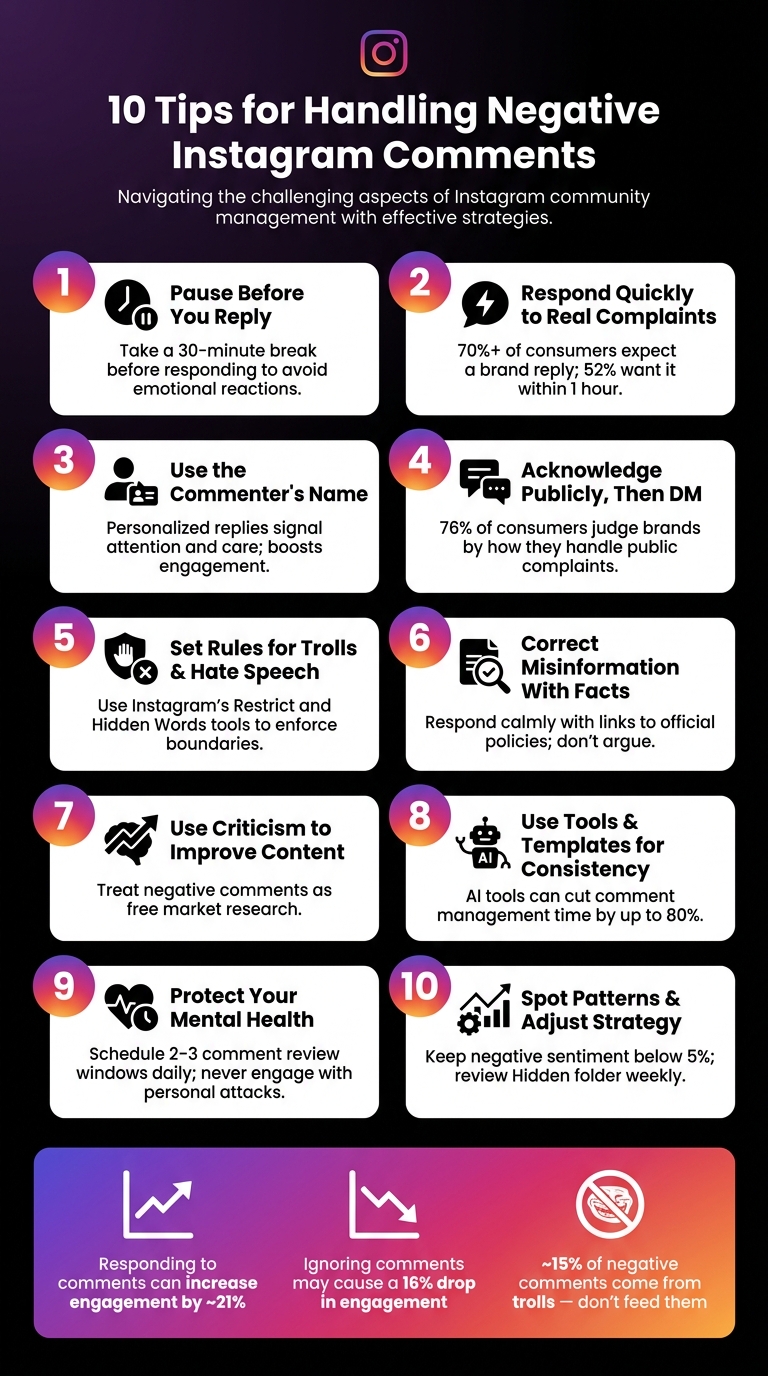
10 Tips for Handling Negative Instagram Comments
1. Pause Before You Reply
When you see a harsh comment, your first reaction is often the worst one. Instead of responding immediately, take a 30-minute break. That time can help you see the comment for what it truly is - maybe a misunderstanding, bad timing, or just a frustrated customer venting.
"Walk away from your keyboard. Seriously. Nothing good comes from firing back in the heat of the moment." - Witty Playbook
Use this pause wisely. Start by categorizing the comment: is it a legitimate complaint, a misunderstanding, or outright trolling? Each of these requires a completely different approach. By identifying the type of comment first, you ensure your response is thoughtful and avoids any knee-jerk reactions that could backfire.
"A rushed reply written in frustration can escalate the situation and create screenshot-worthy content that spreads beyond the original post." - Startup Editor
This step is more important than most people think. A defensive reply can quickly go viral, turning a small issue into a full-blown PR nightmare. On the flip side, a calm and composed response shows maturity and professionalism, not just to the commenter but also to the silent majority who are watching without engaging.
| Response Tone | Impact on Audience |
|---|---|
| Defensive | Escalates conflict and looks unprofessional |
| Robotic | Feels impersonal and dismissive |
| Calm/Human | Builds trust and shows brand maturity |
| Argumentative | Damages reputation and invites negativity |
Taking this pause is the first step in managing negative comments effectively. It sets the tone for how you’ll handle the situation moving forward. Once you’ve cooled off, you can focus on crafting a well-thought-out response.
Here’s a helpful rule for your team: never reply to a negative comment while feeling angry, uncertain, or defensive. For especially tricky situations, draft your reply and ask someone else to review it for tone before you post. A second opinion can make all the difference.
2. Respond Quickly and Professionally to Real Complaints
Once you've taken a moment to assess the situation, the next step is to address valid complaints promptly. Over 70% of consumers expect brands to respond to negative social media comments, and 52% want that response within an hour. Delaying too long isn't just poor customer service - it sends a message to everyone watching that your brand may not care.
"Every unanswered post becomes part of your brand narrative." - Emplifi
Responding swiftly and sincerely can actually work in your favor. Thanks to the "service recovery paradox", customers who see their issues resolved quickly often become even more loyal than those who never encountered a problem. A quick resolution can transform a complaint into a chance to build trust and loyalty.
When replying, aim for clarity and a personable tone. A simple four-step formula works wonders: acknowledge the issue, apologize sincerely, invite the customer to continue the conversation via Direct Message, and keep it concise. Avoid jargon or vague phrases like "some users reported an issue." Instead, take responsibility directly - saying "We made a mistake" builds far more trust. Here's how small changes in wording can make a big difference:
| Response Element | Professional Approach | Weak Approach |
|---|---|---|
| Ownership | "We made a mistake." | "Some users reported an issue." |
| Action | "Please DM us your order number so we can fix this." | "Please contact our support team via our website." |
| Tone | Calm, factual, and empathetic. | Overly formal. |
For critical complaints, aim to respond within 2 hours during business hours. Issues like billing errors, defective products, or shipping problems should be treated as high priority. Start by acknowledging the complaint publicly, then move the conversation to Direct Messages for further details. This approach demonstrates to your entire audience that you value feedback and take customer concerns seriously - not just the individual who raised the issue.
3. Use the Commenter's Name and Tailor Your Response
When responding to comments, adding a personal touch can go a long way in building stronger customer relationships. Generic replies often feel dismissive and suggest you haven’t taken the time to truly engage with the comment. Starting your response with the commenter’s name immediately shows you’ve read their message and are addressing them directly.
"Personalization signals attention and care, encouraging further engagement." - Brooke Seidel, Social Media Strategist
Including their name isn’t the only way to show you’re paying attention. Referencing the specific issue they mentioned makes your response feel genuine. For example, if someone complains about receiving a damaged order, directly acknowledge the damaged order. A vague apology like, “We’re sorry for your experience,” can feel hollow. As Stefan, Founder of Automateed, explains: “Copy-paste without customization is where apologies start to feel fake.”
To craft thoughtful responses, you can use the HEAR method:
- Humanize: Address the commenter by name.
- Empathize: Recognize their frustration or concern.
- Apologize: Offer a sincere apology for the specific issue.
- Resolve: Provide a clear solution or next step.
This approach keeps your response focused, professional, and less likely to escalate the situation.
Not only do personalized replies help resolve concerns, but they also boost engagement. Instagram’s algorithm tends to favor conversations that show genuine interaction, helping your content gain more visibility.
Up next, we’ll explore how to publicly acknowledge issues while smoothly transitioning detailed discussions to private channels.
4. Acknowledge Publicly, Then Move to Direct Messages
When handling negative comments, start by addressing them publicly before transitioning to private messages. Why? Public acknowledgment isn't just for the person who left the comment - it's for everyone watching. It demonstrates that you're paying attention and taking concerns seriously.
"The 'audience' isn't just the person who commented - it's everyone who reads your response later, including potential customers who are quietly deciding whether to trust you." - Marian, Author, Fishbar
This approach matters more than many brands realize. Research shows that 76% of consumers evaluate a brand based on how it manages public complaints. Additionally, posts with active reply threads can experience engagement rates up to 40% higher than those without. Your comment section essentially becomes a trust-building tool. By addressing complaints publicly, you not only deal with the immediate issue but also demonstrate accountability to a broader audience.
However, there’s a balance to strike between what stays public and what moves private. Start with a public acknowledgment and a brief apology to show you care. Then, explain why the conversation needs to continue in direct messages - usually to protect sensitive details like order numbers or billing information. Avoid generic responses like "DM us." Instead, clarify that you're moving to DMs to ensure privacy, which reinforces your transparency.
Once the issue is resolved privately, circle back publicly with a quick update - something like, "Happy we could resolve this for you!" This final step builds trust with everyone following the interaction, often more than the initial reply itself.
Here’s a simple guide to managing these situations effectively:
| Response Stage | What to Do | Where |
|---|---|---|
| Acknowledgment | Show you're listening and care | Public |
| Initial Apology | Validate feelings and de-escalate tension | Public |
| Data Collection | Request sensitive information (order details, etc.) | Private (DM) |
| Resolution | Solve the issue (refund, replacement, etc.) | Private (DM) |
| Closing the Loop | Confirm resolution for the audience | Public |
5. Set Clear Rules for Trolling, Hate Speech, and Abuse
After establishing strategies for personalized responses, the next step is creating firm community standards. Not every negative comment deserves a reply; some require strict enforcement. Without clear guidelines, your comment section risks becoming chaotic - an environment trolls love to exploit.
"Trolls thrive on attention and ambiguity, so your goal is to remove both: establish boundaries, document infractions, and act swiftly on violations." - Madison Hayes, Social Media Marketing Contributor, InfluencerDB
Setting and enforcing respectful community standards not only protects your audience but also reinforces your brand's credibility. Rules should explicitly ban hate speech, credible threats, dehumanizing remarks, doxing, and repeated harassment. Share these guidelines prominently in your bio or as a pinned comment. Doing so ensures your audience knows what’s acceptable and gives you a clear defense if someone disputes a moderation decision.
Instagram offers built-in tools to help enforce these standards. The "Hidden Words" feature (found under Settings > Privacy > Hidden Words) automatically filters comments containing offensive terms, slurs, or even deliberate misspellings like "sc4m". For persistent trolls who don’t cross a clear line, the "Restrict" feature is a smart choice. It allows their comments to remain visible only to them, minimizing escalation since they’re unaware of being moderated. Save blocking for situations involving direct harassment where a clean break is essential.
It’s also important to avoid excessive moderation. With 49% of Instagram comments arriving after business hours, automated filters can help manage the influx. However, leaving constructive criticism visible adds authenticity to your comment section. A feed filled only with praise can feel insincere.
Here’s a breakdown of Instagram’s moderation tools:
| Tool | Visible to Public | Visible to Commenter | Best Used For |
|---|---|---|---|
| Hide | No | Yes | One-off negative or off-topic comments |
| Restrict | No | Yes | Persistent trolls; avoids confrontation |
| Delete | No | No | Slurs, threats, or bot-generated scam links |
| Limit Interactions | No (non-followers) | Yes | Viral moments or harassment waves |
| Block | No | No | Harassment requiring a complete break |
For comments that escalate into credible threats, don't stop at reporting them to Instagram - reach out to local law enforcement. Instagram can assist by providing account details to authorities through proper legal channels.
6. Correct False Information Calmly and With Facts
Misinformation in your comment section can spread quickly, and even one unchecked false claim can influence how people view your brand. Addressing these inaccuracies promptly and clearly is essential, but the focus should always be on providing accurate information - not on "winning" an argument. Remember, your response isn’t just for the person who posted the comment; it’s for everyone who reads the thread.
Start by verifying the claim against your internal records. Once you're confident about the facts, respond with a concise, factual correction. Keep it short and to the point. For example, instead of a long explanation, you could say, "Thanks for bringing this up. Our return policy actually covers this situation. You can find the details here: [link]." Linking to your policy or official documentation is far more effective than engaging in drawn-out discussions, which can sometimes escalate negativity.
A helpful tip is to reframe the original comment neutrally before crafting your response. For instance, instead of focusing on the emotional language in a comment like, "This brand is a total scam," you might interpret it as, "Customer believes they were charged incorrectly." This reframing helps you focus on resolving the issue rather than reacting emotionally. After addressing the concern publicly, move the conversation to Direct Messages for more detailed discussions. On platforms like Instagram, you can also use tools like the "Pin Comment" feature to keep your clarification visible at the top of the post.
In some cases, false claims may come from trolls looking to provoke a reaction rather than resolve an issue. For these situations, hiding the comment is often more effective than engaging publicly. By staying calm and factual, you not only protect your brand’s reputation but also maintain the trust of your audience.
7. Use Constructive Criticism to Improve Your Content
Constructive criticism can be a powerful tool for growth. While negative comments might sting, many offer actionable insights. The key is to look for specifics. For instance, a comment like, "Your tutorial skipped the part where the layers merge", isn't just a complaint - it's a clear guide on where you can improve.
If you notice the same feedback popping up repeatedly (say, three or more times), it’s likely a pattern rather than an isolated issue. Organizing recurring feedback into themes - like pricing misunderstandings, unclear instructions, or product concerns - can help you zero in on areas needing attention. As Stefan, Founder of Automateed, wisely notes:
"Negative comments are free market research - if you treat them like data instead of ego."
When you receive helpful feedback, respond publicly to acknowledge it. A simple reply like, "Thanks for pointing that out; you're right, we could explain that better", shows accountability and builds trust. Sachit Sharma, CEO of Deepsolv.ai, emphasizes:
"In 2026, visible accountability feels more authentic than curated perfection."
But don’t stop there - follow through. If a comment prompts you to update a video description, rewrite a FAQ, or create a follow-up post to clarify confusion, let your audience know. That extra step transforms criticism into a trust-building opportunity. Plus, it encourages continued interaction. With Instagram's 2026 algorithm prioritizing comments three times more than likes, thoughtful responses can even boost your post's visibility. By addressing concerns openly, you not only resolve issues but also strengthen engagement with your audience.
8. Use Comment Management Tools and Templates for Consistency
As your audience grows, managing comments efficiently becomes essential. While handling a handful of comments manually might work, responding to 200 comments daily can take up to 7 hours - clearly not sustainable. AI-powered tools can help reduce that time by as much as 80%.
Centralizing all your comments into one inbox is a smart move. It helps avoid duplicate replies, missed threads, and inconsistent tone. Tools like Outfame take things a step further by combining real-time growth tracking with engagement analytics. This means you're not just responding to comments - you’re also identifying patterns and trends in real-time. Beyond organization, maintaining a consistent tone in your responses is equally important.
A response library can be a lifesaver here. It provides pre-approved language for common situations like complaints, shipping inquiries, or negative reviews, while still allowing for a personal touch. Avoid robotic replies by including placeholders for the commenter’s name and specific concerns. As Mel from Mentionkit wisely states:
"The best community replies sound like a person continuing a discussion, not a brand closing a ticket."
For a more systematic approach, try the four-quadrant comment sorting framework. This method categorizes comments into four types: Info/Positive (questions), Emotion/Positive (praise), Info/Negative (complaints), and Emotion/Negative (hostile or spam). This makes it easier to decide whether to respond personally, use a template, or hide irrelevant comments. By using this framework, response times can be reduced by 30–50%. Combining this method with AI tools ensures every response is timely and high-quality.
Take SNOCKS, for example. This apparel brand used AI-powered tools to manage over 300 comments daily. They saved the equivalent of half a full-time employee’s workload while keeping response times under an hour. Considering that 86% of potential customers are influenced by negative comments, quick and consistent replies can make a huge difference.
9. Set Limits to Protect Your Mental Health
Keeping an eye on negative comments all the time can be draining - especially since Instagram now gives comments three times the weight of likes.
To manage this without overwhelming yourself, set aside two or three specific times each day to review comments. This way, you can stay responsive while keeping negativity from taking over your day. And when it comes to personal attacks, hate speech, or threats, stick to a strict "do not engage" policy - hide, block, or report them immediately. As Stefan, Founder of Automateed, explains:
"I'm here to help, but I won't engage with personal attacks."
Protecting your mental health should always come first. Tools for managing comments efficiently can help limit your exposure to negativity. Instagram offers several features to make this easier. For example, the Restrict feature allows you to deal with repeat trolls by making their comments visible only to them, which helps prevent further escalation. Another handy tool is Hidden Words, which lets you block specific slurs, spam phrases, or trigger words before they even show up in your feed. These tools not only help maintain a positive community but also safeguard your mental well-being.
You can also pin up to three positive comments at the top of your post. This pushes negative remarks further down while setting a constructive tone for your audience.
10. Spot Patterns in Negative Comments and Adjust Your Strategy
While handling individual comments is crucial, identifying trends in negative feedback can help you uncover deeper issues in your process. Recognizing these patterns allows you to refine your overall approach and make meaningful adjustments.
For example, recurring complaints about topics like pricing, shipping delays, or product quality often point to systemic problems. These trends aren't just criticisms - they're valuable insights into what needs improvement.
To address this effectively, start by grouping similar negative comments into broad categories. If you notice frequent questions such as "How much does this cost?" or "Do you ship to Texas?", consider creating a dedicated FAQ post or a Story Highlight to address these common concerns upfront.
Tracking sentiment over time is just as important as monitoring comment volume. As noted by getkoro.app:
"If sentiment starts trending negative on a specific ad, it's often a sign that the audience is saturated and the creative needs to be refreshed, regardless of the CPA."
A well-performing Instagram ad account should keep negative sentiment rates below 5%. If you see a spike, it’s a clear signal to pause and rethink your creative strategy.
Don’t forget to check your Hidden folder weekly. Automated filters can sometimes flag genuine complaints, and reviewing this folder ensures you don’t miss critical feedback. When you resolve a recurring issue - like simplifying a confusing checkout process or addressing delayed shipping - share an update publicly. This not only demonstrates accountability but also builds trust and fosters loyalty. By combining this ongoing analysis with proactive responses and DM follow-ups, you can create a more effective and responsive strategy.
Conclusion
Negative Instagram comments are part of the territory, but how you handle them says a lot about your brand. Across all 10 tips, the message is clear: remain calm, consistent, and professional. Whether you're resolving a genuine issue, correcting false information, or quietly dealing with trolls, your responses shape public perception.
It's just as important to set boundaries as it is to craft thoughtful replies. Harassment, hate speech, and malicious attacks don't deserve your time - hide, block, or report them immediately. Around 15% of negative comments come from trolls looking to provoke rather than resolve, so avoid feeding into their behavior. Staying disciplined helps prevent unnecessary escalation and keeps your engagement strategy on track.
The numbers back this up. Responding to comments can increase engagement by about 21%, while ignoring them might result in a 16% drop. A well-managed comment section can turn criticism into an opportunity for growth.
To stay ahead, consider using advanced tools like Outfame. These tools offer real-time analytics and streamlined comment management, making it easier to respond quickly and effectively. With features like 24/7 growth tracking, you can monitor sentiment shifts, address potential issues early, and fine-tune your engagement strategy.
"Your job isn't to reduce the comment count. Your job is to reduce missed opportunities." - Mel, Social Media and Customer Support, Mentionkit
The goal isn't to silence the conversation but to ensure you don't miss valuable insights. When handled effectively, even negative feedback can guide improvements and drive growth.
FAQs
When should I reply vs hide or delete a comment?
Responding to legitimate complaints is an opportunity to build trust and demonstrate accountability. Stay calm, acknowledge the issue, and offer a clear solution. For sensitive matters, it’s best to move the conversation to direct messages to handle them privately and effectively.
When dealing with spam, hate speech, threats, or harassment, hiding comments is a smarter approach than outright deleting them. This way, the commenter doesn’t realize their comment is hidden, which helps minimize the risk of escalation. Prioritize fostering meaningful interactions to keep your community positive and welcoming.
What’s the best way to move a complaint to DMs without looking evasive?
When addressing complaints publicly, it's essential to strike the right tone - one that’s empathetic, genuine, and solution-focused. Acknowledge the issue with sincerity and validate the frustration expressed. Taking responsibility shows you care and are committed to resolving the situation.
For instance, you could respond with something like: "We’re sorry to hear about your experience; please check your DMs so we can make this right." This kind of reply does two important things: it reassures the person who raised the concern and demonstrates to others that you’re transparent and proactive in handling feedback.
How can I track negative-comment patterns and fix root issues?
To better understand and manage negative comments, start by sorting feedback into categories such as product concerns, shipping problems, or incorrect information. Keeping a log of these interactions helps pinpoint recurring issues and operational gaps. Leverage analytics tools to track sentiment trends and measure how quickly responses are provided. When you notice multiple users flagging the same problem, their input can guide you in tweaking internal processes, enhancing products, or fine-tuning your marketing approach.


